
Hart Osteopathy
at The Pilates Workshop St Albans

About Brian Hart
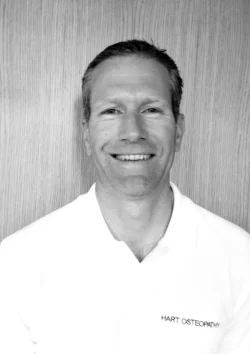
After training to become a Pilates Teacher in 2001 with Body Control Pilates, my fascination with the human body and it’s subsequent breakdown grew and so did my thirst for knowledge.
This drove me on to study Osteopathy and one of it’s main principles of a strong mind/body connection is at the core of my treatment philosophy. With a calm mind and a positive attitude, restoration of balance to the body can be achieved thus enabling us to move again.’
Brian Hart BSc (Hons)
Registered Osteopath
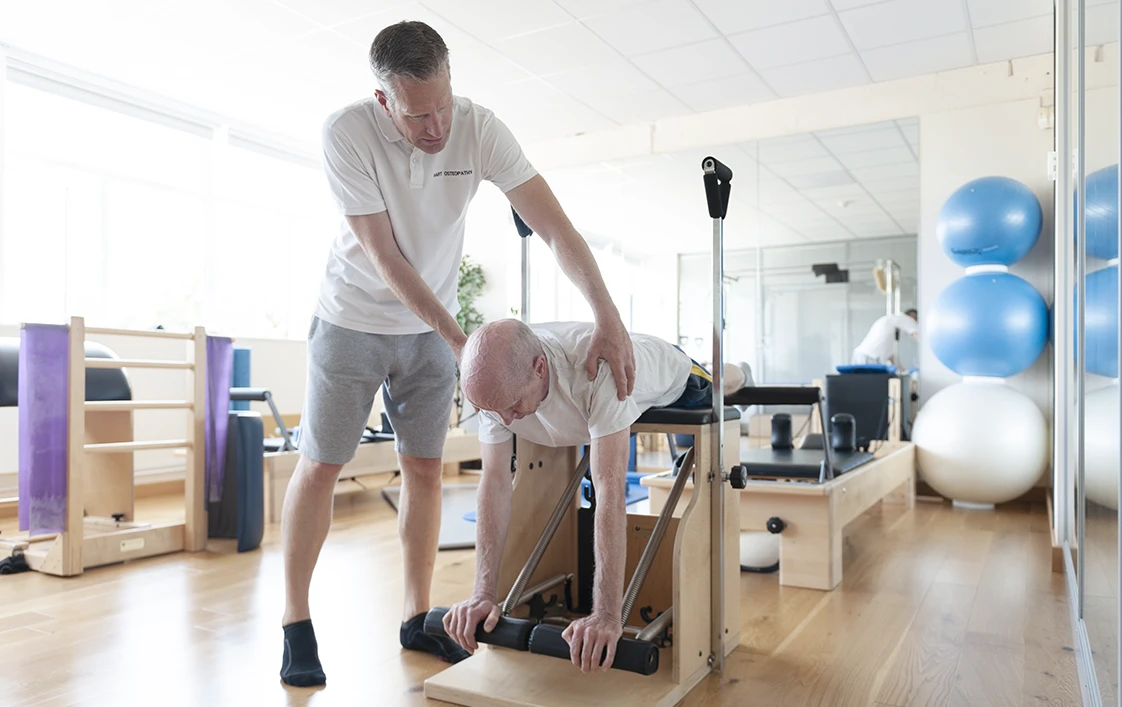
Hart Osteopathy is part of the Pilates Workshop in St.Albans and offers Osteopathic treatment in a calm and modern environment.
Movement is a key part of maintaining health – but due to modern day lifestyles we are far too sedentary or repetitive in our daily routines.
At Hart Osteopathy we encourage movement of the body via a host of safe treatment techniques including:
- Osteopathic treatment
- Medical accupuncture
- Prescription Orthotics
- Specialised exercise plans
The focus of Hart Osteopathy is to empower the patient and provide not only treatment but guidance and advice on such elements as lifestyle changes, nutrition and exercise.
With a fully equipped Pilates Studio on site, we pride ourselves on providing all your rehabilitation needs – under one roof.
Call Brian Hart on 07956 449 898 or email brianhart@hartosteopathy-uk.com
‘Brian succesfully treated me for a trapped Ulna Nerve in my arm. After a consultation session he managed to diagnose and treat my arm, he was reassuring and knowledgeable throughout the whole process.’
‘I highly recommend him’
‘I felt the benefit of the treatments from Brian after a few sessions, for an old shoulder problem, which had not responded to previous extensive physiotherapy, acupuncture and massage. My quality of life has been greatly improved by the reduction in pain and the ability to use my arm and shoulder normally again.
‘Brian is very professional, thorough and caring, I would highly recommend him and his practice to anyone with any kind of musculoskeletal problem.’
‘I came to see Brian with lower back pain that had been going on for three months. No amount of sports massage was working so I thought I would try a different approach. Brian did a thorough assessment at our first session and very quickly got to the route of the problem. From the first session I noticed an improvement and after 4 sessions I was back in the pool and easing back into cycling and running.’
‘I would highly recommend Brian!’
‘I was referred to Brian for intractable pain which was not responding to treatment. Over time I am in far less pain and my ability to move and lead an active life has increased greatly. Brian has always maintained a professional attitude, genuine interest in the wellbeing of myself as his patient and an ability to get to grips with treating musculoskeletal problems that have defeated others.’
‘I have no hesitation in recommending him’
Treatment plans
Osteopathic Treatment
For acute presentations where the patient is unable to move freely due to pain and restricted range of movement. This passive treatment modality is used to encourage the body to “break free” from these limited patterns. Manipulation, articulation and muscle energy techniques of certain joints and soft tissues can alter the way painful stimulus is recognised by the nervous system, therefore enabling the body to move and subsequently heal.
Imagine your path of rehabilitation as a ladder, this section is your first few rungs of that ladder.
Movement Based Therapy
For more chronic presentations where tissue damage is not new but pain/sensitisation and restrictions in movement are still present. The patient’s patterns of life are evaluated here, from previous injuries to environmental factors such as work, sports and hobbies. All these can have a major effect on how your body moves. Prescribing bespoke exercises to “unlock” these habitual patterns is the next few rungs on your ladder of rehabilitation.
These bespoke exercises must then progress to become functional for that particular patient and prepare their body for the stresses of movement again without limitation or fear of pain.
When this stage is reached your are nearing the top of your ladder.
A Little Help From Our Friends…
Sometimes the body needs a little assistance in healing, some tissues that have a poor blood supply or a build up of calcification can delay or prevent this healing process from initiating. Tissues such as muscle and bone have a good blood supply so tend to heal well, whereas tissues such as tendons, ligaments and spinal discs have poor blood supplies so can take much longer to heal.
This is where ad hoc treatment techniques such as Shockwave therapy, Ultrasound and medical dry needling can assist those tissues in their healing.
Treatment Information
Shockwave Therapy
Shockwave therapy is a non-surgical treatment that works by delivering impulses of energy. This acoustic wave carries high energy to painful areas that then promotes regeneration and reparative processes of the soft tissues. This can allow new blood vessel formation, stimulation of new tissue, breakdown of calcified tissue and trigger pain relief.
This fast and effective, clinically proven method can help with conditions such as:
- Plantar Fasciitis
- Shoulder pain – Sub-acromial pain and Calcification of the tendon.
- Elbow pain – Lateral and Medial epicondylitis (Tennis and Golfer’s Elbow)
- Hamstring pain – Hamstring tendinopathy
- Achilles Tendinopathy
- Hip pain – Throchanteric bursitis
Ultrasound Therapy
Ultrasound works by sending small vibrations through the skin, this in turn heats the underlying tissues and encourages increased blood flow into the area. This can also encourage muscles to relax and may help the injured tissues heal due to the increase in blood and lymph flow to the area.
Medical Dry Needling
Also called trigger point dry needling, mainly used to treat myofascial pain. Muscles can sometimes develop knotted areas known as trigger points, the needles are used to stimulate these areas and it is thought the result changes the way the brain and muscles communicate. This can help disperse localised contractions within the muscle and allow the body to start to move freely again.
Kinesiology Taping
Kinesiology tape is applied to symptomatic parts of the body to enhance the nervous systems awareness of that area. This could be to increase the use of a recovering tissue or decrease force and movement into an acutely painful area. There is also limited research which states the tape can aid support and drainage of the tissues.
Remember all these additional treatment techniques are used alongside the afore mentioned techniques to offer a multi-discipline approach to your recovery.